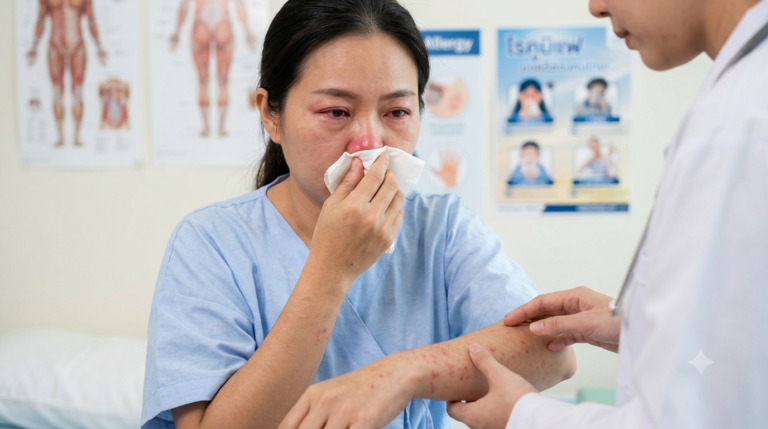
Allergies can significantly affect daily life, causing symptoms such as nasal congestion, runny nose, sneezing, itchy eyes, and recurrent colds. For many people, these symptoms return seasonally or persist throughout the year despite conventional treatments.
In Traditional Chinese Medicine (TCM), allergies are viewed differently from Western medicine. Rather than focusing solely on symptom relief, TCM aims to identify and address the underlying imbalance contributing to recurring allergic reactions. Acupuncture is one of the primary treatments used to help restore this balance and support the body’s natural defense mechanisms.
This article explains how acupuncture for allergies works according to Traditional Chinese Medicine, which acupuncture points are commonly used, and the potential benefits of treatment.
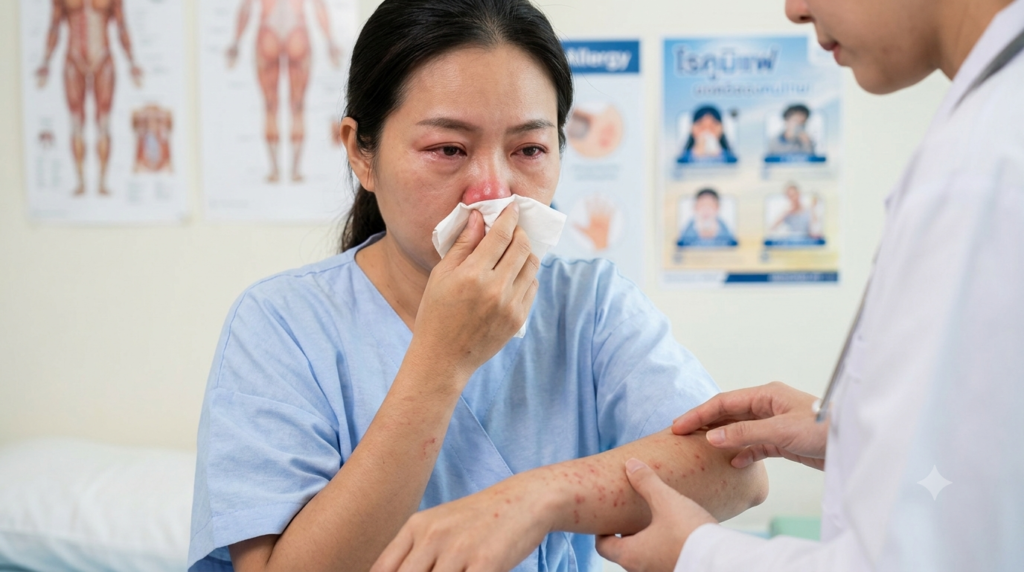
Understanding Allergies from a Traditional Chinese Medicine Perspective
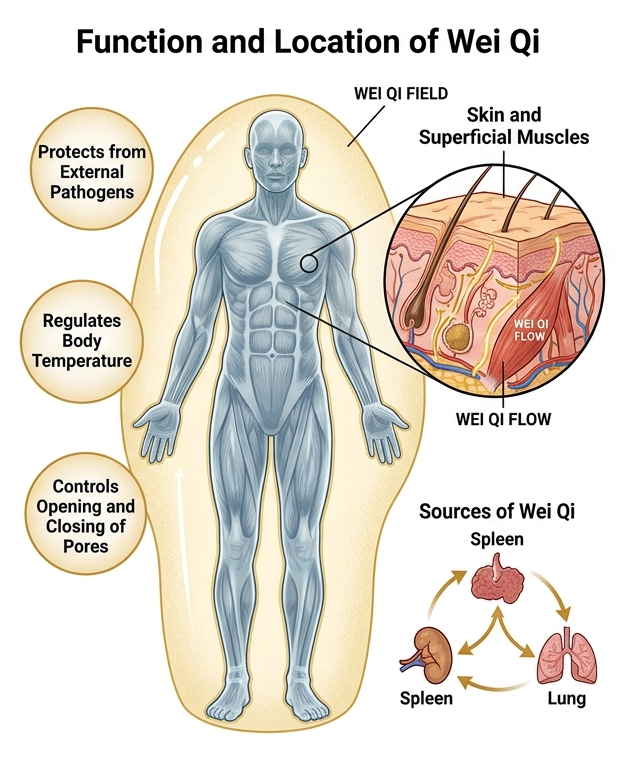
According to Traditional Chinese Medicine, the body’s ability to resist external environmental influences depends on the strength of its Wei Qi (Defensive Qi), often described as the body’s protective energy.
Two organ systems play particularly important roles:
- The Lung – governs respiration, regulates the skin, and helps protect the body from external pathogens.
- The Spleen – is responsible for transforming food into energy and nutrients, supporting overall vitality and immune function.
When the Spleen Qi becomes deficient, the body may not efficiently absorb nutrients from food. Over time, this can lead to fatigue, reduced energy, and a weakened defensive system.
As a result, the body becomes more susceptible to environmental triggers such as:
- Cold wind
- Heat
- Humidity
- Dust
- Pollen
- Seasonal weather changes
These external factors may contribute to symptoms including:
- Frequent sneezing
- Runny nose
- Nasal congestion
- Itchy nose
- Recurrent allergic flare-ups
From the TCM perspective, treatment focuses on strengthening the body’s internal balance rather than simply suppressing symptoms.
How Does Acupuncture Help with Allergies?
Acupuncture involves inserting very fine, sterile needles into specific acupuncture points to regulate the flow of Qi (vital energy) throughout the body.
For patients with allergies, treatment generally aims to:
- Support healthy Lung function
- Strengthen the Spleen
- Promote the circulation of Qi
- Enhance the body’s natural defensive function (Wei Qi)
- Help reduce the frequency and severity of allergy symptoms over time
Unlike treatments that only provide temporary symptom relief, acupuncture seeks to improve the body’s overall resilience.

Common Acupuncture Points for Allergy Relief
The exact acupuncture prescription varies according to each patient’s diagnosis. However, several points are commonly used during allergy treatment.
Yingxiang (LI20)
Located beside the nostrils, Yingxiang (LI20) is frequently used to help relieve:
- Nasal congestion
- Runny nose
- Difficulty breathing through the nose
Yintang (EX-HN3)
Located between the eyebrows, Yintang is often selected to:
- Open the nasal passages
- Ease sinus discomfort
- Promote relaxation
Cuanzhu (BL2)
Situated at the inner ends of the eyebrows, Cuanzhu (BL2) may help reduce:
- Nasal obstruction
- Sinus pressure
- Head discomfort associated with allergies
Zusanli (ST36)
Zusanli (ST36) is one of the most important acupuncture points for strengthening overall health. In Traditional Chinese Medicine, it is commonly used to:
- Support immune function
- Improve energy levels
- Promote digestive health
- Strengthen the body’s resistance
Sanyinjiao (SP6)
Sanyinjiao (SP6) is widely used to strengthen the Spleen and improve digestion. Better digestive function is believed to support the production of Qi and Blood, contributing to improved overall health.
Benefits of Acupuncture for Allergies
Many patients seek acupuncture to help manage recurring allergy symptoms while supporting long-term wellness.
Potential benefits may include:
- Reduced nasal congestion
- Less frequent sneezing
- Relief from runny nose
- Improved breathing
- Better overall energy levels
- Enhanced resilience to seasonal environmental changes
- Support for overall immune health
Individual results vary depending on each person’s condition, overall health, and treatment plan.
Acupuncture Treats More Than Just the Symptoms
One of the key principles of Traditional Chinese Medicine is that successful treatment should address both the root cause and the manifesting symptoms.
Rather than only relieving a blocked nose or reducing sneezing temporarily, acupuncture aims to restore the body’s internal balance. By supporting the Lung, strengthening the Spleen, and promoting healthy Qi circulation, the body may become better equipped to respond to environmental triggers over time.
Is Acupuncture Safe for Allergy Treatment?
When performed by a licensed and qualified Traditional Chinese Medicine practitioner, acupuncture is generally considered safe. Sterile, single-use needles are used, and treatment plans are individualized based on each patient’s symptoms and constitutional pattern.
Patients experiencing persistent or severe allergy symptoms should undergo a comprehensive medical evaluation to determine the most appropriate treatment approach. Acupuncture may be used alongside conventional medical care when appropriate.
Conclusion
Recurring allergies can affect your comfort, sleep, work performance, and quality of life. Traditional Chinese Medicine approaches allergy management by identifying underlying imbalances and supporting the body’s natural ability to maintain health.
Acupuncture for allergies is designed not only to help relieve symptoms such as nasal congestion, sneezing, and runny nose, but also to strengthen the body’s internal systems and promote long-term balance. When combined with appropriate lifestyle habits and professional medical guidance, acupuncture may be a valuable component of a comprehensive allergy management plan.
Frequently Asked Questions (FAQs)
Does acupuncture really help with allergies?
Acupuncture may help relieve symptoms associated with allergies, including nasal congestion, sneezing, runny nose, and itchy nose. In Traditional Chinese Medicine (TCM), treatment focuses on restoring the body’s internal balance and supporting overall immune function rather than simply suppressing symptoms. Individual results vary depending on the underlying condition and response to treatment.
Can acupuncture help with allergic rhinitis (hay fever)?
Yes. Acupuncture is commonly used as a complementary therapy for allergic rhinitis (hay fever). Many patients seek treatment to help manage seasonal or perennial allergy symptoms such as nasal congestion, sneezing, watery eyes, and runny nose. A personalized treatment plan is typically developed based on each patient’s pattern of imbalance.
How many acupuncture sessions are needed for allergies?
The number of treatments depends on the severity, duration, and frequency of your allergy symptoms.
- Mild or recent symptoms may improve within a few sessions.
- Chronic or recurrent allergies often require a longer course of treatment.
- Your practitioner will recommend a personalized treatment schedule after your initial assessment.
Is acupuncture safe for allergy treatment?
When performed by a licensed and qualified Traditional Chinese Medicine practitioner, acupuncture is generally considered safe. Sterile, single-use needles are used for every treatment, and adverse effects are typically mild and temporary, such as slight soreness or minor bruising at the needle site.
Does acupuncture cure allergies permanently?
Acupuncture is not considered a permanent cure for allergies. Its goal is to help reduce the frequency and severity of symptoms, improve quality of life, and support the body’s natural regulatory functions. Some patients experience long-lasting improvement, while others benefit from periodic maintenance treatments, especially during allergy seasons.
Can acupuncture boost the immune system?
In Traditional Chinese Medicine, acupuncture is used to strengthen the body’s Wei Qi (Defensive Qi), which represents the body’s natural protective energy. Modern research also suggests that acupuncture may influence immune and inflammatory responses, although further high-quality studies are needed to fully understand these mechanisms.
Can I continue taking allergy medication while receiving acupuncture?
In many cases, yes. Acupuncture is often used as a complementary therapy alongside conventional medical treatment. Patients should continue taking prescribed medications unless advised otherwise by their healthcare provider. Always inform both your physician and acupuncturist about any medications you are currently taking.
When is the best time to start acupuncture for seasonal allergies?
For seasonal allergies, many practitioners recommend beginning acupuncture several weeks before allergy season starts. Starting treatment early may help prepare the body for seasonal allergens and potentially reduce the severity of symptoms once the allergy season begins.
Are there any side effects after acupuncture?
Most people tolerate acupuncture well. Some individuals may experience mild soreness, temporary bruising, slight fatigue, or a feeling of relaxation after treatment. These effects are generally short-lived and resolve without intervention.
Who is a good candidate for acupuncture for allergies?
Acupuncture may be appropriate for adults experiencing:
- Seasonal allergies (hay fever)
- Allergic rhinitis
- Persistent nasal congestion
- Frequent sneezing
- Runny nose
- Recurring allergy symptoms that affect daily life
A consultation with a qualified Traditional Chinese Medicine practitioner is recommended to determine whether acupuncture is suitable for your individual condition.
Contact US 👇
🌐 Offical Website : www.greenbellclinic.com
📌 IG : @greenbell_clinic
🟩 LINE Offical : @greenbell
⬛ TIKTOK : greenbellmedicalclinic
🟥 Youtube : Greenbell Medical Clinic